





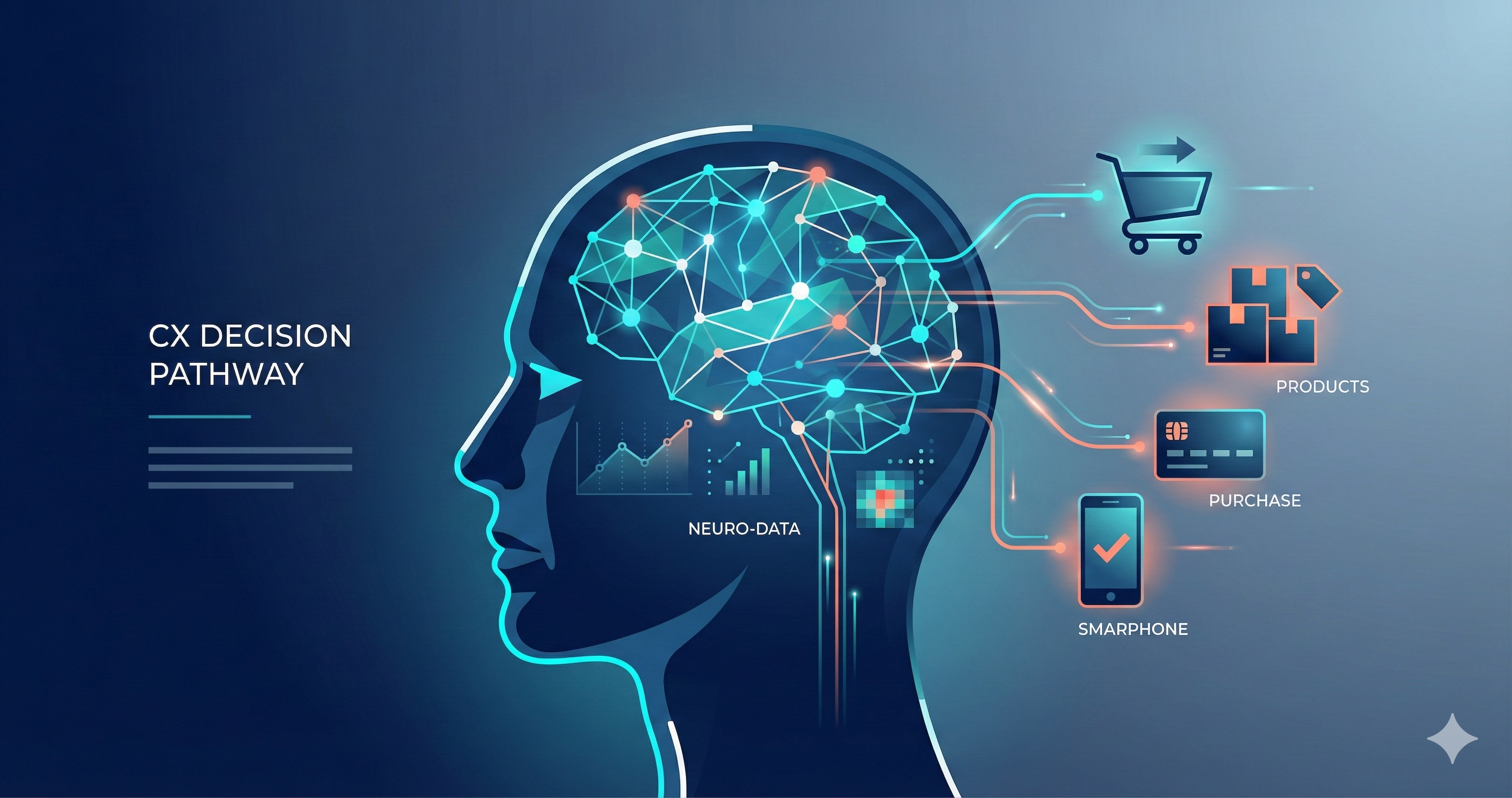
Your customers decide to buy 7 seconds before they consciously know it.
Yet we’re still asking them what they think in focus groups.
Despite exhaustive testing, 95% of new products fail because traditional focus groups measure what people say, not how their brains actually respond, highlighting the need for neural metrics to gauge true engagement.
The measurement paradox
Traditional market research has a fatal flaw: it assumes customers understand their own decision-making. They don’t. The limbic system (the emotional center of the brain) makes purchasing decisions before the prefrontal cortex can rationalize them.
This is why a customer will tell you they chose your product because of “quality and value” when their brain actually responded to the color psychology of your packaging and the dopamine hit from your brand story.
From lab experiment to mainstream strategy
In 2025, neuromarketing isn’t a niche experiment anymore. It’s scalable, data-driven, and surprisingly accessible.
The technology that was once confined to university research labs is now in retail stores:
Eye-tracking glasses, now lightweight and affordable, are used in retail stores across Europe and Asia to evaluate signage and digital interfaces, ensuring messages trigger the right attention, trust, and desire.
Emotion AI decodes emotional states from vocal patterns and facial expressions, giving brands real-time feedback on customer reactions.
Wearable biometrics measure heart rate variability, skin conductance, and pupil dilation: revealing stress, excitement, and engagement levels that customers can’t articulate.
When brands read minds (and what they learned)
P&G uses EEG and facial coding to pre-test ad campaigns. In one case, researchers found viewers disengaged halfway through a shampoo commercial. Moving the before-and-after transformation earlier boosted memory retention and emotional impact.
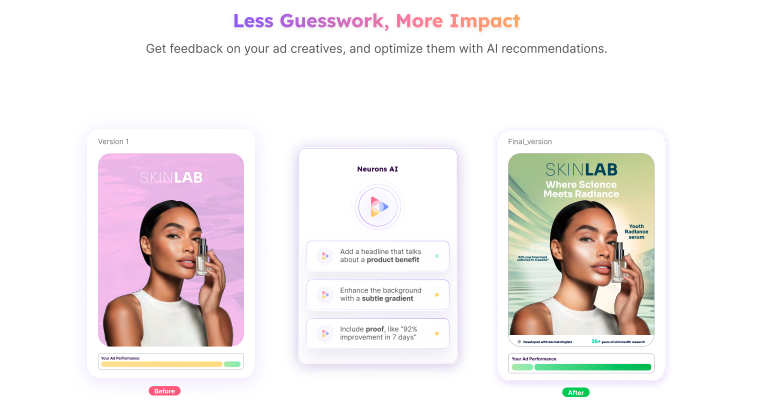
Lowe’s deployed portable eye-tracking technology from Neurons to measure shoppers’ focus on displays and signage, particularly after ad exposure. The data revealed which visual elements most effectively reinforced messaging and which were ignored entirely.
Disney can predict how audiences will react to a film after analyzing facial expressions for just 10 minutes. Experts identify microexpressions and use them to predict emotional responses throughout the entire movie.
L’Oréal developed the AirLight Pro hairdryer using cognitive sensory sciences and psychoacoustic research. By studying emotional responses to UI sounds, they engineered the device’s acoustic signature around release time, spectral centroid, and melodic contour. The result is a hairdryer in which sound quality directly affects user confidence and relaxation during the hair care routine, making the experience feel more premium and intentional.

The in-store opportunity
Physical retail is becoming a biometric playground.
Lowe’s uses behavioral mapping to combine eye-tracking data with in-store movement patterns, identifying which ads influence foot traffic and product engagement. Global retailers use this technology to determine product placements and shelf arrangements that increase purchase probability.
The insight? Customers don’t consciously notice most in-store stimuli, but their brains respond to placement, color, lighting, and spatial design in predictable ways.
The ROI that matters
This isn’t just fascinating science. It’s profitable:
- Emotional responses generate up to 2.5x ROI on advertising spend, according to a 2024 meta-analysis by Affectiva, showing emotionally resonant campaigns measured via neural signals produce significantly higher returns.
- 62% of consumers responded more to ads optimized via biometrics and neural analytics, according to Deloitte and Emotiv research
- 45% of Fortune 500 companies are now experimenting with at least one form of neural or biometric testing in their campaigns in 2025
The global neuromarketing market is projected to grow from $1.71 billion in 2024 to $2.62 billion by 2030, driven by wider adoption in e-commerce, media, and consumer health, plus increasing demand for emotionally intelligent, personalized branding.
The real-time future
We’re moving toward dynamic, responsive experiences:
Wearable integration: Smartwatches and health trackers will soon provide continuous biometric data for consumer research.
Cross-cultural AI models: AI will increasingly interpret emotional responses within a cultural context, recognizing that a smile means different things in Tokyo versus Toronto.
Neuro-reactive content: Adaptive ads could soon respond to consumer emotions dynamically, altering tone, visuals, or offers based on live feedback.
The Ethical elephant in the room
Here’s where it gets uncomfortable.
Mental health professionals have warned against over-reliance on AI for emotional support, citing limitations in clinical judgment, empathy, and ethical oversight. Privacy experts argue that emotional data (because of its intimate and potentially revealing nature) deserves special protection.
The bias problem: Many current affective computing systems show significant accuracy disparities across demographic groups. A system trained predominantly on one population may misinterpret others’ emotional cues.
The invisible labor: These emotionally interactive systems extract emotional labor from users: data that helps refine the model’s responsiveness, without compensation or recognition.
For CX professionals, this raises critical questions: How transparent should we be about biometric measurement? Where’s the line between optimization and manipulation? Who owns emotional data?
What this means for CX strategy
In e-commerce, neuromarketing research shows customers spend 2.6 seconds on a product page before deciding to stay or leave, making image selection, color psychology, and layout optimization critical for increasing conversions.
The implications for CX professionals:
Stop asking, start measuring: Supplement traditional research with biometric data that reveals unconscious responses.
Design for the limbic system: Emotional resonance matters more than rational features in decision-making
Test the invisible elements: Color, spatial design, visual hierarchy, and micro-interactions all trigger measurable brain responses.
Build ethical guardrails now by creating policies on data use, transparency, and consent before deploying biometric measurement tools.
The essential insight
Neuromarketing isn’t a lab experiment anymore. It’s a strategic CX tool that measures the invisible emotional experience that actually determines purchasing behavior.
The question isn’t whether to use these insights. It’s how to use them responsibly while delivering experiences that genuinely serve customers, not just convert them.